Mobilappar

Feeder för iPhone, iPad och Android

Dina flöden i fickan, synkroniserade med Feeder på webben. Få en avisering när ett flöde du valt har något nytt.

En QR-kod som öppnar Feeder i App Store eller Google Play

Skanna med mobilens kamera Feeder öppnas i mobilens appbutik.

Gratis. Logga in med ditt Feeder-konto eller skapa ett i appen.

8:36
Hem
FeedsAlla inläggOlästStjärnmärkta
USGS News· 8 timNY
Where do those mesmerizing beautiful blue colors in Yellowstone’s pools come from?
What’s behind the magnificent clear blue of Sapphire Pool in Biscuit Basin? Or those gorgeous milky blues in the namesake features of Norris Geyser Basin’s Porcelain Terrace?
USGS Earthquakes· 9 timNY
M 6.4 - 30 km WSW of Lata, Solomon Islands
Grand Teton National Park· 3 dagarNY
2026 Elk Reduction Program begins November 14 in Grand Teton National Park
Grand Teton National Park will conduct its annual elk reduction program November 14 through December 6.
Death Valley National Park· 6 dagarNY
Fall Survey Records 137 Endangered Fish in Death Valley National Park
The National Park Service counted 137 endangered Devils Hole pupfish during an Oct. 10 population survey, nearly double the 77 fish observed in spring 2026.
NOAA· 4 dagarNY
California coastal water levels break records
Above-normal high tides, warm waters, and El-Niño push water levels to new heights
HemFeedsUpptäckInställningar
Feeders Android-app på Hem, Olästa: Where do those mesmerizing beautiful blue colors in Yellowstone’s pools come from?; M 6.4 - 30 km WSW of Lata, Solomon Islands; 2026 Elk Reduction Program begins November 14 in Grand Teton National Park; Fall Survey Records 137 Endangered Fish in Death Valley National Park; California coastal water levels break records.
8:36
Hem
Where do those mesmerizing beautiful blue colors in Yellowstone’s pools come from?
What’s behind the magnificent clear blue of Sapphire Pool in Biscuit Basin? Or those gorgeous milky blues in the namesake features of Norris Geyser Basin’s Porcelain Terrace?
Some fraction of light that hits the surface of the pool is reflected back off the water’s surface, but let’s consider what happens to the light that enters the pool. Just as various molecules in the atmosphere absorb light, water in liquid form absorbs light as well. The red, orange and yellow end of the visible light spectrum is absorbed more strongly than blue light.
Additionally, the longer the distance the light has to travel through the water, the more absorption there will be. Maybe you’ve noticed this if you’ve ever been swimming in the ocean—as you go deeper the world becomes a palette of washed-out blues.
Läs mer
Feeders iPhone-app med ett öppet inlägg, Where do those mesmerizing beautiful blue colors in Yellowstone’s pools come from? från USGS News, under en bild av Sapphire Pool.
  • 4,7 App Store · 1 024 betyg
  • 4,5 Google Play · 1 600 recensioner

Det når dig innan du öppnar appen

11:13
Sun, Nov 8
11:13
USGS Earthquakes· nu
M 6.4 - 30 km WSW of Lata, Solomon Islands
En Android-låsskärm klockan 11:13 med en avisering från Feeder: USGS Earthquakes, M 6.4 - 30 km WSW of Lata, Solomon Islands.

En avisering från flödena du väljer

Aktivera det för flöden som inte kan vänta och låt resten vara tysta. Det ingår i gratisabonnemanget.

8:36
Feeder12 olästa
Where do those mesmerizing beautiful blue colors in Yellowstone’s pools come from?
USGS News · för 8 tim sedan
M 6.4 - 30 km WSW of Lata, Solomon Islands
USGS Earthquakes · för 9 tim sedan
Feeder
12
olästa inlägg
Where do those mesmerizing beautiful blue colors in Yellowstone’s pools come from?
12Feeder
En iPhone-hemskärm med Feeders widget: 12 olästa och de två senaste inläggen, Where do those mesmerizing beautiful blue colors in Yellowstone’s pools come from?; M 6.4 - 30 km WSW of Lata, Solomon Islands. Feeders ikon visar också 12.

Dina senaste inlägg på hemskärmen

En widget med det senaste från alla dina flöden eller från en mapp. På iPhone visas antalet olästa på appikonen.

Gott om läsutrymme på en iPad

På en surfplatta ligger listan kvar bredvid inlägget. På alla skärmar visar Enkel vy bara text och bilder, med det typsnitt och den storlek du väljer.

8:12 PM Thu Nov 5
HemFeedsUpptäckInställningar
FeedsUSGS News
Alla inläggOlästStjärnmärkta
1 tim
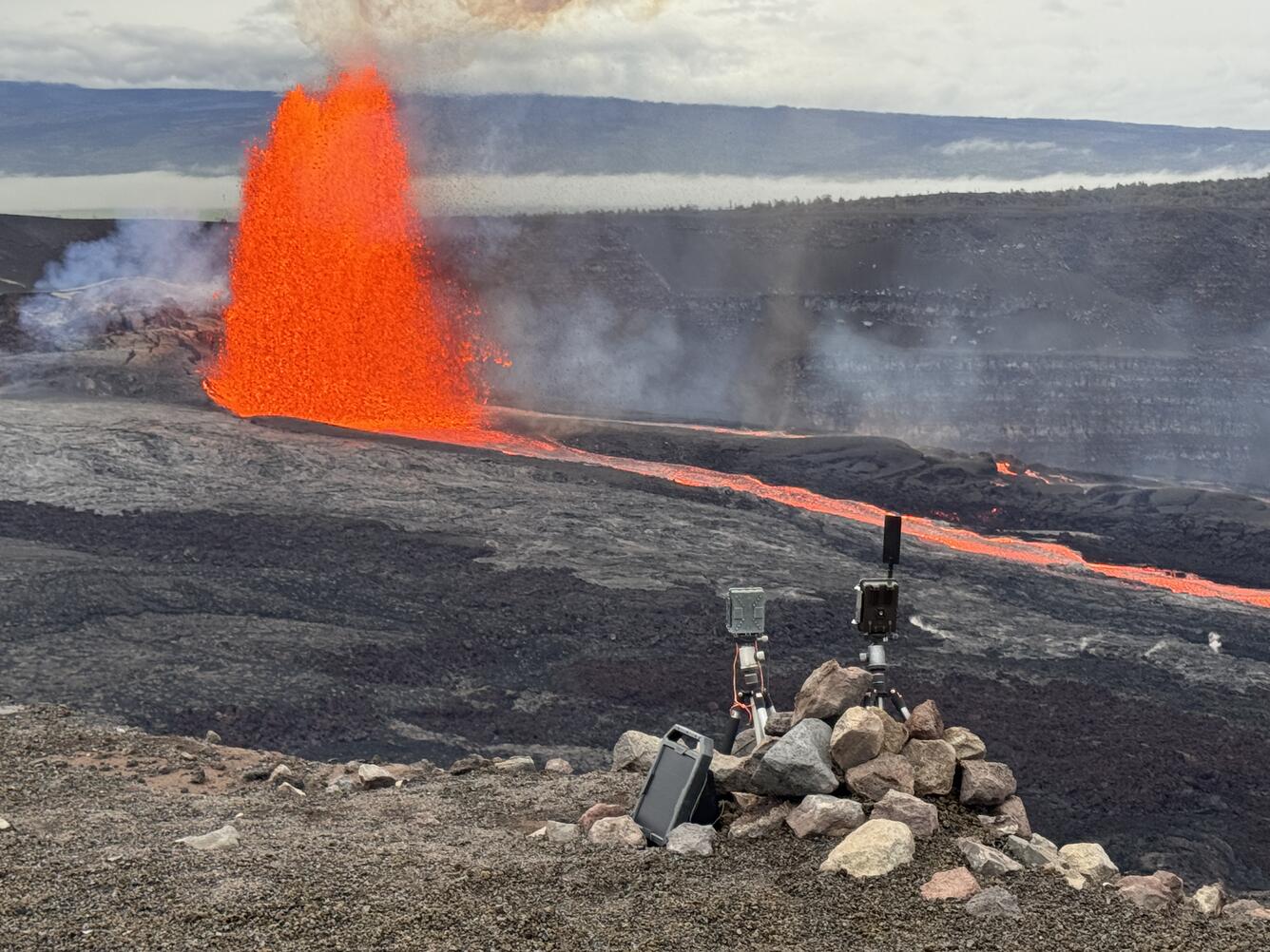
Volcano Watch — Such great heights: measuring Kīlauea’s lava fountains
“How tall is the fountain?” This is the question that volcano watchers keep coming back to once the lava fountains start at Kīlauea.
2 timNY
Volcano Minute — How tall is that fountain?
When lava fountains have erupted at the summit of Kīlauea, one question always quickly follows: How tall is that fountain?
23 timNY
Mercury exposure to northern elephant seal pups in utero is high and affected by the oceanic foraging behavior of their moms
1 dagNY
Wildfires Increased Feather River Water Flow
A new study led by U.S. Geological Survey scientists estimates that the 2020 and 2021 wildfires in northern California increased the amount of water moving through the upper Feather River watershed.
3 dagarNY
Picturing the Unimaginable: Two Artists’ Early Journey into Yellowstone's Untamed Wonders
How can a landscape of vividly colored hot springs and erupting geysers be conveyed when it defies imagination?
Volcano Watch — Such great heights: measuring Kīlauea’s lava fountains
“How tall is the fountain?” This is the question that volcano watchers keep coming back to once the lava fountains start at Kīlauea. And there have been plenty of opportunities to ask this, as we’ve now had 56 lava fountains over the past two years at the summit of Kīlauea.
Some of these fountains have peaked fairly low (a little over 100 yards or 91 meters) but some have been absolutely towering (over 500 yards or 457 meters). So how do USGS Hawaiian Volcano Observatory (HVO) geologists actually measure the fountain height?
There are actually two sets of measurements. First, there are the real-time estimates that are put in the status reports and daily updates. Second, there are the more detailed and accurate measurements calculated later on that are meant for scientific analysis.
Läs mer
Aa
Feeder på en iPad: inläggen från USGS News i en kolumn till vänster och Volcano Watch — Such great heights: measuring Kīlauea’s lava fountains öppet bredvid, med en bild av en lavafontän.

Frågor

Är appen gratis?
Ja. Appen är gratis, liksom ett Feeder-konto med upp till 200 flöden, aviseringar och widgeten inkluderade. Betalabonnemang fungerar också i appen.
Behöver jag ett konto?
Ja. Skapa ett i appen med din e-postadress, Google eller Apple, eller logga in med ditt befintliga konto så finns dina flöden där.
Vilka enheter fungerar den på?
iPhone och iPad med iOS 15 eller senare (widgetarna kräver iOS 17) samt Android 7 eller senare.
Vilken Feeder-app är er på Google Play?
Den som anges som Feeder.co. Där finns även en annan RSS-app som heter Feeder, men den är inte vår. Google Play-knappen på den här sidan öppnar rätt app.

Fler svar i hjälpcentret

Hjälp