Phone apps

Feeder for iPhone, iPad and Android

Your feeds in your pocket, in step with Feeder on the web. A notification when a feed you picked has something new.

A QR code that opens Feeder in the App Store or Google Play

Scan with your phone's camera It opens Feeder in your phone's own store.

Free. Sign in with your Feeder account, or create one in the app.

8:36
Home
FeedsAll postsUnreadStarred
USGS News· 8 hrsNEW
Where do those mesmerizing beautiful blue colors in Yellowstone’s pools come from?
What’s behind the magnificent clear blue of Sapphire Pool in Biscuit Basin? Or those gorgeous milky blues in the namesake features of Norris Geyser Basin’s Porcelain Terrace?
USGS Earthquakes· 9 hrsNEW
M 6.4 - 30 km WSW of Lata, Solomon Islands
Grand Teton National Park· 3 daysNEW
2026 Elk Reduction Program begins November 14 in Grand Teton National Park
Grand Teton National Park will conduct its annual elk reduction program November 14 through December 6.
Death Valley National Park· 6 daysNEW
Fall Survey Records 137 Endangered Fish in Death Valley National Park
The National Park Service counted 137 endangered Devils Hole pupfish during an Oct. 10 population survey, nearly double the 77 fish observed in spring 2026.
NOAA· 4 daysNEW
California coastal water levels break records
Above-normal high tides, warm waters, and El-Niño push water levels to new heights
HomeFeedsDiscoverSettings
Feeder's Android app on Home, Unread: Where do those mesmerizing beautiful blue colors in Yellowstone’s pools come from?; M 6.4 - 30 km WSW of Lata, Solomon Islands; 2026 Elk Reduction Program begins November 14 in Grand Teton National Park; Fall Survey Records 137 Endangered Fish in Death Valley National Park; California coastal water levels break records.
8:36
Home
Where do those mesmerizing beautiful blue colors in Yellowstone’s pools come from?
What’s behind the magnificent clear blue of Sapphire Pool in Biscuit Basin? Or those gorgeous milky blues in the namesake features of Norris Geyser Basin’s Porcelain Terrace?
Some fraction of light that hits the surface of the pool is reflected back off the water’s surface, but let’s consider what happens to the light that enters the pool. Just as various molecules in the atmosphere absorb light, water in liquid form absorbs light as well. The red, orange and yellow end of the visible light spectrum is absorbed more strongly than blue light.
Additionally, the longer the distance the light has to travel through the water, the more absorption there will be. Maybe you’ve noticed this if you’ve ever been swimming in the ocean—as you go deeper the world becomes a palette of washed-out blues.
Read more
Feeder's iPhone app with a post open, Where do those mesmerizing beautiful blue colors in Yellowstone’s pools come from? from USGS News, under its photo of Sapphire Pool.
  • 4.7 App Store · 1,024 ratings
  • 4.5 Google Play · 1,600 reviews

It reaches you before you open it

11:13
Sun, Nov 8
11:13
USGS Earthquakes· now
M 6.4 - 30 km WSW of Lata, Solomon Islands
An Android lock screen at 11:13 with a notification from Feeder: USGS Earthquakes, M 6.4 - 30 km WSW of Lata, Solomon Islands.

A notification from the feeds you pick

Turn it on for the feeds that can't wait and leave the rest quiet. It's part of the free plan.

8:36
Feeder12 unread
Where do those mesmerizing beautiful blue colors in Yellowstone’s pools come from?
USGS News · 8 hr. ago
M 6.4 - 30 km WSW of Lata, Solomon Islands
USGS Earthquakes · 9 hr. ago
Feeder
12
unread posts
Where do those mesmerizing beautiful blue colors in Yellowstone’s pools come from?
12Feeder
An iPhone home screen with Feeder's widget: 12 unread, and the two newest posts, Where do those mesmerizing beautiful blue colors in Yellowstone’s pools come from?; M 6.4 - 30 km WSW of Lata, Solomon Islands. Feeder's icon shows 12 too.

Your newest posts on the home screen

A widget with the latest from all your feeds, or from one folder. On iPhone, the unread count sits on the app's icon.

Room to read on an iPad

On a tablet the list stays beside the post. On every screen, Simple view shows just the text and pictures, in the font and size you choose.

8:12 PM Thu Nov 5
HomeFeedsDiscoverSettings
FeedsUSGS News
All postsUnreadStarred
1 hr
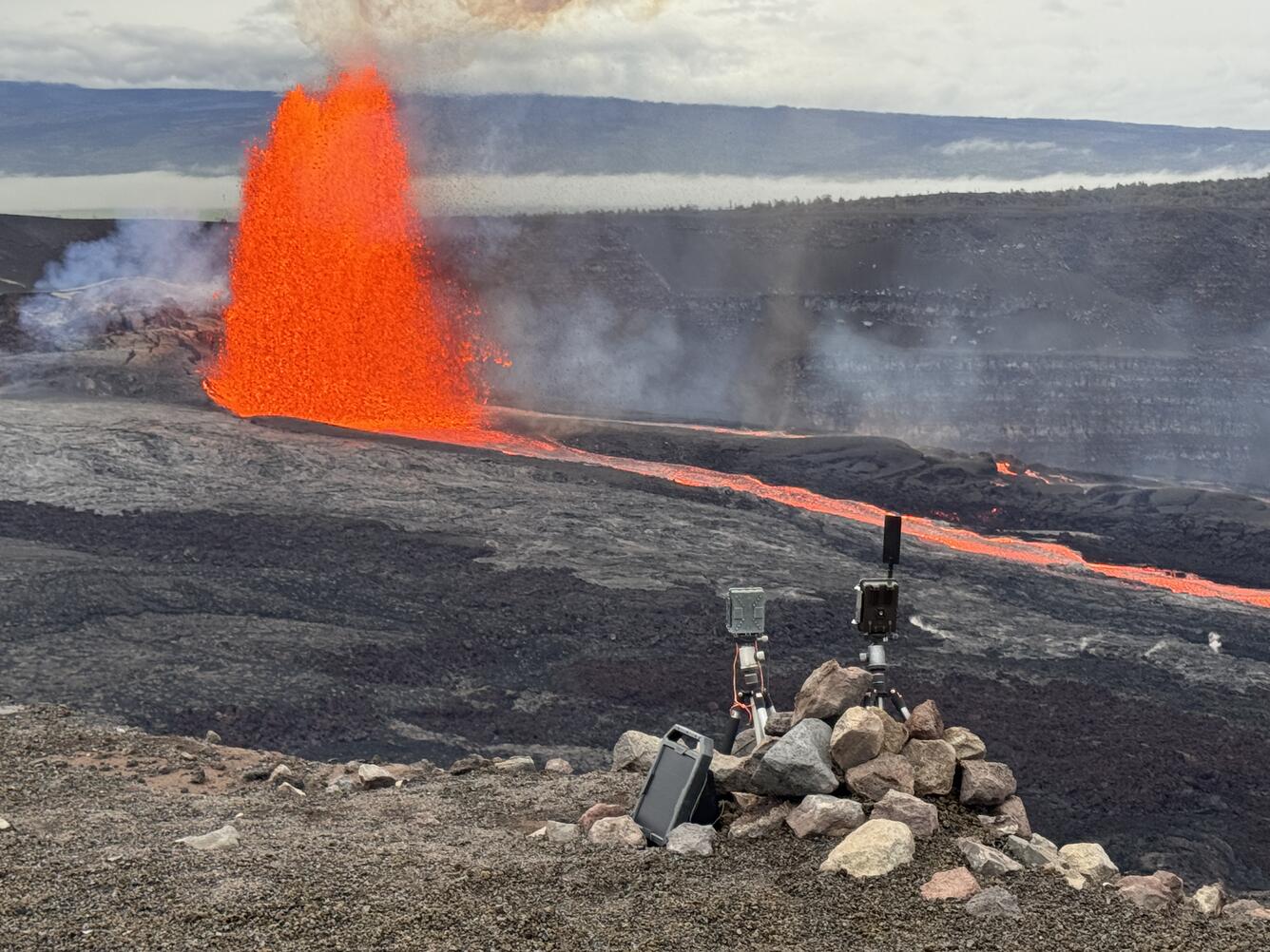
Volcano Watch — Such great heights: measuring Kīlauea’s lava fountains
“How tall is the fountain?” This is the question that volcano watchers keep coming back to once the lava fountains start at Kīlauea.
2 hrsNEW
Volcano Minute — How tall is that fountain?
When lava fountains have erupted at the summit of Kīlauea, one question always quickly follows: How tall is that fountain?
23 hrsNEW
Mercury exposure to northern elephant seal pups in utero is high and affected by the oceanic foraging behavior of their moms
1 dayNEW
Wildfires Increased Feather River Water Flow
A new study led by U.S. Geological Survey scientists estimates that the 2020 and 2021 wildfires in northern California increased the amount of water moving through the upper Feather River watershed.
3 daysNEW
Picturing the Unimaginable: Two Artists’ Early Journey into Yellowstone's Untamed Wonders
How can a landscape of vividly colored hot springs and erupting geysers be conveyed when it defies imagination?
Volcano Watch — Such great heights: measuring Kīlauea’s lava fountains
“How tall is the fountain?” This is the question that volcano watchers keep coming back to once the lava fountains start at Kīlauea. And there have been plenty of opportunities to ask this, as we’ve now had 56 lava fountains over the past two years at the summit of Kīlauea.
Some of these fountains have peaked fairly low (a little over 100 yards or 91 meters) but some have been absolutely towering (over 500 yards or 457 meters). So how do USGS Hawaiian Volcano Observatory (HVO) geologists actually measure the fountain height?
There are actually two sets of measurements. First, there are the real-time estimates that are put in the status reports and daily updates. Second, there are the more detailed and accurate measurements calculated later on that are meant for scientific analysis.
Read more
Aa
Feeder on an iPad: the posts of USGS News in a column at the left, and Volcano Watch — Such great heights: measuring Kīlauea’s lava fountains open beside it with its photo of a lava fountain.

Questions

Is the app free?
Yes. The app is free, and so is a Feeder account with up to 200 feeds, notifications and the widget included. A paid plan works in the app too.
Do I need an account?
Yes. Create one in the app with your email, Google or Apple, or sign in with the one you have and your feeds are there.
Which devices does it run on?
iPhone and iPad with iOS 15 or later (the widgets need iOS 17), and Android 7 or later.
Which Feeder is yours on Google Play?
The one listed as Feeder.co. Another RSS app there is also called Feeder, and it isn't ours. The Google Play button on this page opens the right one.

More answers in the help center

Take your feeds with you

A QR code that opens Feeder in the App Store or Google Play

Scan with your phone's camera It opens Feeder in your phone's own store.